
Surfaces Built for Constant Foot Traffic
Commercial Epoxy Flooring in Ridgefield for retail stores, restaurants, offices, showrooms, and medical facilities requiring durable, cleanable surfaces
Retail floors accumulate scuff marks from shopping carts and display fixtures, restaurant kitchens absorb grease that makes tile grout impossible to clean, and medical waiting rooms require surfaces that tolerate daily disinfectant mopping without degrading. WSM Epoxy Floors installs commercial-grade epoxy systems throughout Ridgefield designed for environments where appearance directly affects customer perception and floor failure means business interruption. The continuous surface eliminates grout lines where bacteria and grime accumulate, which explains why restaurants and medical offices specify epoxy over traditional tile.
Commercial installations use faster-curing formulations that allow phased application, so half a showroom remains operational while the other half undergoes coating. The system's build includes a penetrating primer that stabilizes porous concrete, a pigmented base coat that hides substrate imperfections, and a clear urethane topcoat that provides UV stability and chemical resistance beyond what standard epoxy offers alone.
Arrange an on-site evaluation to discuss traffic patterns and determine the coating thickness your specific business environment requires.
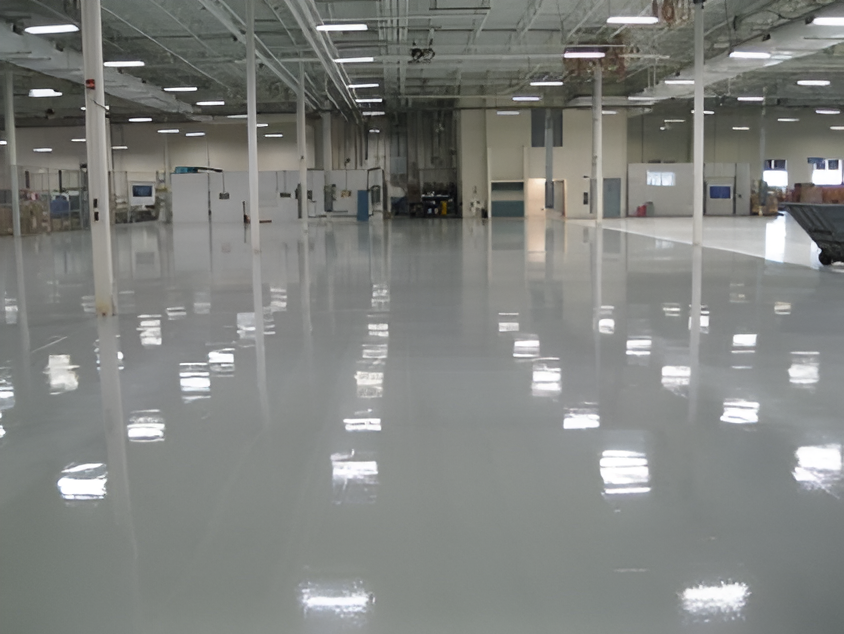
How Commercial Epoxy Addresses High-Traffic Demands
The coating's performance depends on matching the formulation to the wear pattern, which differs between a café where chairs scrape constantly and a showroom where foot traffic concentrates near displays but remains light overall. High-solids epoxy contains less solvent and more reactive resin, producing a thicker cured film that resists abrasion from wheeled carts and resists indentation from stationary loads like merchandise racks.
After curing, floors in restaurants no longer show dark streaks where kitchen mats trapped moisture against bare concrete, and retail spaces present uniform color even in threshold areas where sunlight previously faded standard coatings. Office corridors that once showed worn paths from desk chairs rolling repeatedly over the same routes now maintain consistent gloss because the urethane topcoat distributes wear across its entire thickness rather than concentrating damage at specific points.
The system does not accommodate ongoing water infiltration from plumbing leaks or exterior drainage problems, which must be corrected before installation to prevent coating failure. Expansion joints in the concrete slab remain visible through the epoxy and require flexible sealant caps to prevent the rigid coating from cracking as the building shifts with seasonal temperature changes.
Answers to Frequent Service Questions
Commercial projects require coordination with business operations to minimize disruption, with installation schedules typically planned around closure days or after-hours access.
How long before a coated floor supports full commercial use?
The epoxy reaches foot-traffic hardness within twenty-four hours, but wheeled equipment and heavy displays should wait seventy-two hours to avoid creating permanent impressions in the coating while cross-linking completes at the molecular level.
What makes restaurant floors resist grease buildup differently than tile?
The nonporous epoxy surface prevents oil from penetrating into substrate pores, and the lack of grout lines eliminates the recessed channels where grease collects and oxidizes into the brown residue that requires acid cleaners to remove from traditional tile installations.
Why do some commercial floors yellow near windows?
Standard epoxy resins break down under UV exposure, causing amber discoloration within months in sun-exposed areas, which is why aliphatic urethane topcoats that maintain color stability replace aromatic epoxy in showrooms and storefronts with large glass facades.
When does a commercial floor need full removal instead of recoating?
If the existing epoxy is delaminating from the concrete or shows widespread cracking from structural movement, applying new coating over compromised material simply transfers the failure to the new layer, requiring mechanical removal back to sound substrate before reinstallation.
What slip resistance rating do Ridgefield commercial spaces typically require?
Medical facilities and restaurant kitchens usually specify aluminum oxide aggregate in the topcoat to achieve a coefficient of friction above 0.6, which meets ADA wet-surface standards, while retail showrooms often choose lower texture to allow easier dust mopping and maintain high-gloss appearance.
WSM Epoxy Floors works with property managers and business owners to schedule installations that align with operational requirements and municipal inspection timelines. Contact us to review your floor's current condition and develop a project timeline that minimizes business disruption.