
Surfaces Designed for Forklift Loads
Warehouse & Distribution Center Flooring in Ridgefield for facilities requiring seamless systems that withstand constant forklift traffic
High-volume logistics operations generate concentrated wheel loads that quickly degrade concrete, especially at the turn points where forklifts pivot repeatedly throughout shifts. Warehouse & Distribution Center Flooring in Ridgefield addresses this by creating a seamless epoxy or urethane system that distributes impact forces across a bonded layer rather than allowing wheels to abrade bare concrete. WSM Epoxy Floors installs these systems in active warehouses and distribution centers where downtime must be minimized and floor integrity directly affects operational throughput.
The system bonds to prepared concrete and forms a monolithic surface without joints, which eliminates the edges and seams where forklift wheels typically cause spalling or cracking. Safety striping can be integrated during installation, creating permanent lane markers and hazard zones that do not require repainting as tape and paint would. Dust reduction is a secondary benefit, as the sealed surface prevents concrete dusting that contaminates inventory and fouls equipment air filters.
Arrange an on-site evaluation to measure floor flatness and discuss coating thickness based on your equipment loads.
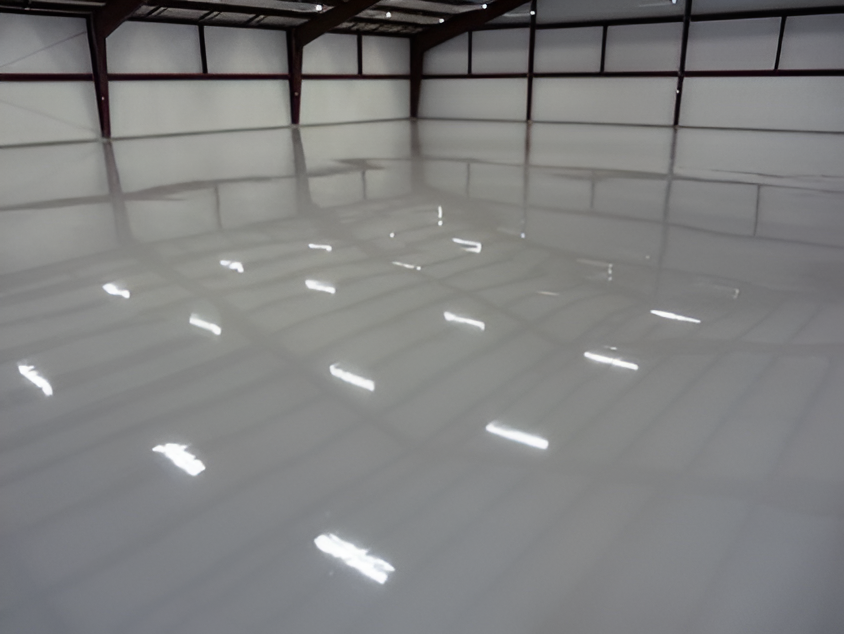
How Industrial Flooring Prevents Concrete Degradation
The coating transfers impact energy across a flexible layer rather than allowing it to fracture the concrete's surface directly, which is why coated floors in high-traffic aisles outlast untreated concrete by years. Forklift operators notice smoother travel and reduced vibration over coated surfaces compared to rough or patched concrete, which also reduces wear on equipment suspension components and extends tire life.
Once cured, the surface resists most industrial chemicals, hydraulic fluids, and cleaning agents without staining or softening, allowing spills to be wiped clean instead of penetrating into the concrete. The seamless finish installed by WSM Epoxy Floors means no grout lines to trap debris or crack under load, and the monolithic surface allows for efficient dust mopping and scrubbing without catching on edges. In distribution centers where cleanliness standards are tied to customer contracts, this ease of maintenance directly supports compliance.
Heavy equipment durability is achieved through coating thickness and the use of flexible urethane topcoats in areas with the most severe turning and braking forces. Coating systems are selected based on the specific equipment operating in your facility, including wheel hardness, load weights, and traffic frequency, since these variables determine whether a standard epoxy or a more resilient urethane system is appropriate.
Answers to Frequent Facility Flooring Questions
Warehouse managers often ask how these systems hold up under their specific operational demands and what installation requires.
What makes warehouse flooring different from standard garage epoxy?
Warehouse coatings are applied at greater thickness and often use urethane topcoats instead of epoxy, providing the flexibility needed to absorb repeated forklift impacts without cracking or delaminating.
How is safety striping integrated without creating edges that peel?
Striping is applied as part of the coating process, either embedded between layers or chemically bonded into the topcoat, so it wears at the same rate as the surrounding floor rather than peeling like tape.
When should a facility in Ridgefield recoat rather than install a new system?
Recoating is viable when the existing coating is still bonded but showing surface wear, whereas new installations are required when delamination or concrete damage is present beneath the coating.
What preparation is required in an active warehouse with limited downtime?
Sections are often coated in phases, with prep work and application scheduled during off-shifts or weekends to allow one area to cure while operations continue in others.
How does the system reduce dust compared to untreated concrete?
Epoxy and urethane coatings seal the concrete's porous surface, preventing the abrasion and carbonation that cause concrete dusting, which reduces airborne particulates and the need for frequent sweeping.
WSM Epoxy Floors maps out installation sequences that accommodate your operational schedule and equipment movements. Schedule a consultation to review coating options based on the specific forklift models and load patterns in your facility.