
Restoring Floors Without Full Replacement
Epoxy Floor Repair & Recoating in Ridgefield for worn or damaged epoxy surfaces requiring crack treatment and surface rejuvenation
Epoxy floors wear through predictable mechanisms: topcoat abrasion in high-traffic lanes, delamination where improper surface prep allowed bond failure, and cracking where the underlying concrete shifts or settles. Epoxy Floor Repair & Recoating in Ridgefield evaluates these failure modes to determine whether localized repair or full recoating is the more cost-effective and structurally sound approach. WSM Epoxy Floors removes failed sections, treats cracks in the substrate, and reapplies coating systems that integrate seamlessly with sound areas, extending floor life without the expense and downtime of complete removal and reinstallation.
Surface resurfacing grinds away the worn topcoat and reapplies a fresh layer, restoring chemical resistance and appearance without disturbing the base coat if it remains well-bonded. Coating replacement becomes necessary when delamination or widespread cracking indicates that the existing system has lost structural integrity and can no longer protect the concrete beneath it.
Arrange an inspection to identify which sections require full replacement versus recoating or crack repair only.
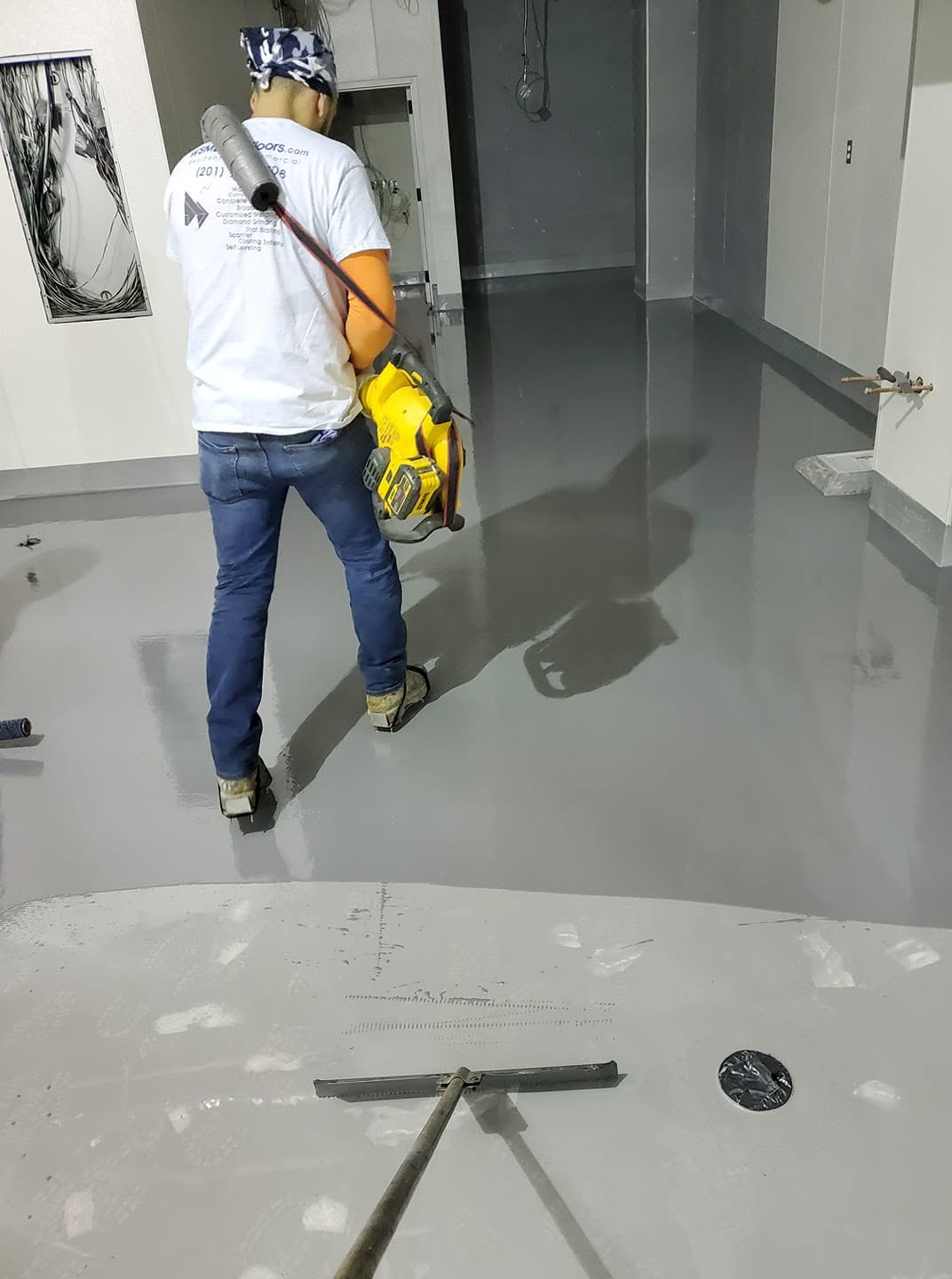
What Changes After Floor Rejuvenation
Recoated floors regain their chemical resistance and cleanability, preventing the staining and etching that occurs once the topcoat wears through to the more porous base layer beneath. Cracks that were allowing moisture infiltration are sealed with flexible epoxy or urethane fillers that move with the concrete rather than fracturing again immediately, which halts the progressive spalling that widens cracks over time. In areas where delaminated sections were removed and replaced, the floor returns to a uniform level surface without the trip hazards or edges that develop around failing coatings.
The visual transformation is often dramatic, as worn traffic lanes that had become dull and stained return to uniform gloss and color. WSM Epoxy Floors matches existing floor color and texture as closely as possible, though slight variations may occur due to aging of the original coating or differences in ambient conditions during application. The recoated surface performs as it did when first installed, providing the same slip resistance, impact tolerance, and ease of cleaning that made epoxy suitable for the application initially.
Crack treatment does not eliminate the underlying cause of cracking—whether from substrate settlement, thermal expansion, or structural loading—but it does prevent water and contaminants from entering the crack and accelerating concrete damage. Recoating systems include surface preparation that removes contaminants and profiles the existing coating to ensure the new layer bonds mechanically, avoiding the delamination that occurs when new coatings are applied over smooth or contaminated surfaces.
Questions Before Starting Repair Work
Property managers and business owners in Ridgefield frequently need to understand what repair involves and how it compares to full replacement.
What determines whether a floor can be recoated instead of fully replaced?
If the base coat is still bonded to the concrete and only the topcoat has worn away, recoating is viable, but delamination or substrate damage requires full removal and reinstallation.
How are cracks treated to prevent them from reappearing?
Cracks are routed out to create a clean edge, filled with flexible epoxy or urethane that accommodates minor movement, then topcoated to seal and protect the repair from moisture and chemicals.
When does worn epoxy become a maintenance issue rather than just cosmetic?
Once the topcoat is fully worn through, the base coat absorbs stains and chemicals, becomes harder to clean, and begins to degrade, requiring intervention before concrete damage occurs.
What preparation is involved in surface resurfacing compared to new installation?
Resurfacing requires grinding the existing topcoat to create a profile for the new layer, removing any contaminants, and ensuring the base coat is sound—less intensive than full concrete prep but still critical for bond strength.
How does the timeline for repair compare to new installation?
Repairs and recoating typically require less time than full installation since substrate prep is reduced, but curing times for the new topcoat remain the same before the floor can return to service.
WSM Epoxy Floors performs adhesion testing and visual inspection to map out which sections need what level of repair, providing a scope that balances cost with long-term performance. Schedule a site assessment to review your floor's current condition and discuss whether repair or full replacement delivers better value for your situation.