
Systems Engineered for Equipment Loads
Industrial Epoxy Flooring in Ridgefield for manufacturing plants, warehouses, distribution centers, and equipment storage areas handling heavy machinery and chemical exposure
Forklift traffic creates point loads that crack standard concrete, hydraulic fluid leaks etch untreated floors into pitted surfaces that harbor contaminants, and pallet jacks dragging across rough concrete generate dust that coats inventory and clogs equipment. WSM Epoxy Floors installs industrial epoxy systems throughout Ridgefield built to handle the mechanical stress and chemical exposure that warehouse and manufacturing environments generate continuously. These installations use higher thickness and reinforced formulations compared to commercial or residential applications because the consequences of floor failure in industrial settings include operational shutdowns and safety violations.
The process begins with shot blasting rather than grinding, which creates a deeper anchor profile in the concrete and removes weak surface laitance that would compromise bond strength under dynamic loading. Chemical-resistant formulations incorporate novolac or vinyl ester resins that withstand prolonged contact with solvents, acids, and petroleum products without softening or delaminating.
Request a facility assessment to identify load zones and chemical exposure areas that require specific coating specifications.
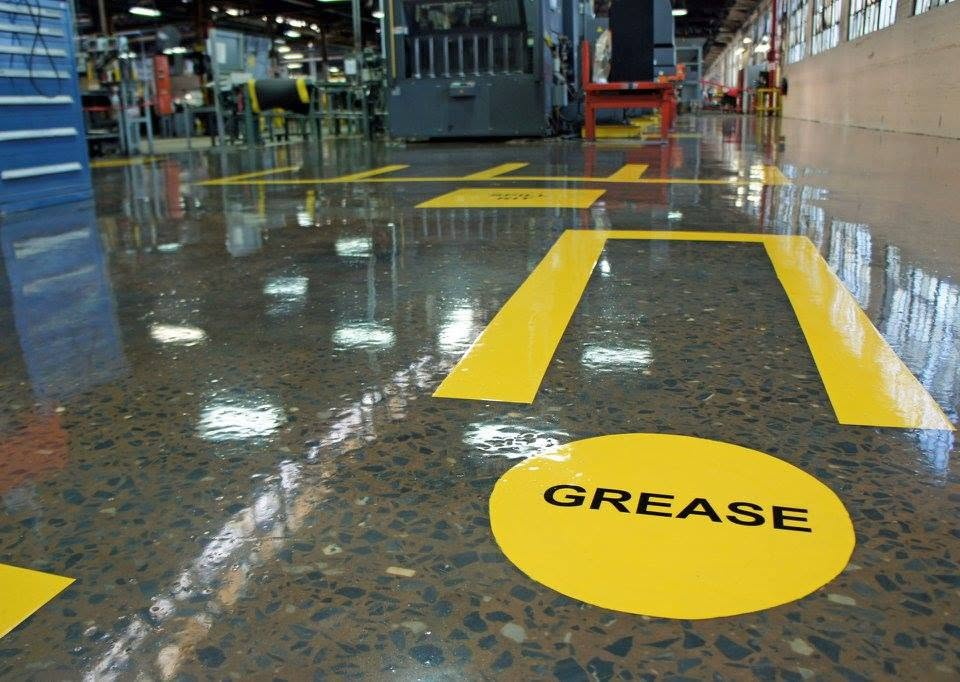
What Proper Industrial Flooring Requires
Industrial specifications define performance criteria that directly affect longevity: compressive strength determines whether the coating resists impact from dropped tools or materials, flexural strength indicates how well it bridges minor substrate cracks without fracturing, and abrasion resistance measured by Taber testing predicts how many forklift passes the surface withstands before wearing through. Projects in distribution centers often specify aggregate topcoats that increase traction for foot traffic while maintaining smooth enough texture that pallet jacks roll without excessive resistance.
WSM Epoxy Floors maps chemical exposure zones during planning because different areas of a facility require different resin types—shipping docks where only water exposure occurs can use standard epoxy, while battery charging stations need acid-resistant novolac, and solvent storage areas require vinyl ester that maintains integrity when gasoline or acetone spills sit overnight before cleanup. Floors transition from porous concrete that absorbs spills into sealed systems where liquids pool on the surface until removed, which changes cleanup procedures but prevents contamination from penetrating into the slab where it continues off-gassing for years.
The system does not correct underlying structural issues such as settlement cracks wider than half an inch or slabs with inadequate rebar that flex under load, both of which transfer movement to the epoxy and cause premature failure. Expansion joints require routing and filling with flexible polyurea to accommodate building movement without cracking the rigid coating.
Common Questions About This Service
Industrial flooring projects involve engineering considerations beyond standard installations, with specifications often dictated by operational requirements and insurance guidelines.
What thickness do industrial floors require compared to commercial installations?
Manufacturing environments typically specify sixty to one hundred twenty mils total system thickness to handle impact and abrasion, which requires multiple coats and aggregate reinforcement, while commercial floors often perform adequately at twenty to forty mils since they face lighter wear patterns.
How do chemical-resistant coatings differ from standard epoxy?
Novolac epoxy contains additional epoxy groups in the molecular structure that create tighter cross-linking, forming a denser barrier that resists solvent penetration, while vinyl ester coatings incorporate styrene that provides even greater chemical resistance but requires more careful installation due to higher volatility and odor during application.
Why do warehouse floors in Ridgefield often show premature wear near loading docks?
Exterior moisture and road salt tracked in on forklift tires concentrate at dock entry points, and standard epoxy formulations break down when subjected to repeated freeze-thaw cycles in this transition zone, requiring topcoat upgrades to polyaspartic or polyurea in high-exposure areas.
When should existing industrial floors be recoated versus fully replaced?
Surface wear that has not yet exposed the concrete substrate can accept a new topcoat after abrasion to create bond profile, but delamination or coating failure down to bare concrete requires full removal because compromised material underneath transfers failure patterns to new layers.
What standards apply to food manufacturing facilities?
FDA-compliant systems must resist bacterial growth and withstand daily washdown with hot water and caustic cleaners, typically requiring antimicrobial additives in the epoxy and polyurethane cement topcoats that maintain USDA sanitation approval for direct and indirect food contact zones.
WSM Epoxy Floors conducts detailed facility evaluations that include concrete moisture testing, surface profile verification, and chemical exposure mapping to ensure the specified system matches operational demands. Schedule a consultation to review your facility's flooring requirements and discuss installation phasing that maintains production schedules.