
Floors That Handle Real Household Use
Residential Epoxy Flooring in Ridgefield for basement moisture, garage stains, and high-traffic utility spaces
WSM Epoxy Floors applies residential epoxy systems to garages, basements, laundry rooms, mudrooms, and utility spaces in Ridgefield where concrete surfaces absorb stains, collect moisture, or show wear from daily foot traffic and equipment use. The coating bonds directly to prepared concrete, forming a continuous surface that resists oil, detergents, and water infiltration. Homeowners request these installations when basement floors develop efflorescence from ground moisture or when garage floors show tire marks and fluid stains that standard cleaning cannot remove.
The process involves grinding the existing concrete to open the pores, removing any previous sealers or contaminants, then applying a primer coat followed by the epoxy base layer and optional decorative color flakes. The final topcoat provides abrasion resistance and determines the level of slip resistance based on the room's function. Basement installations address the persistent humidity common in New Jersey's below-grade spaces by creating a vapor-resistant barrier that prevents moisture from wicking through the slab.
Schedule a property evaluation to assess concrete condition and discuss color options for your specific rooms.
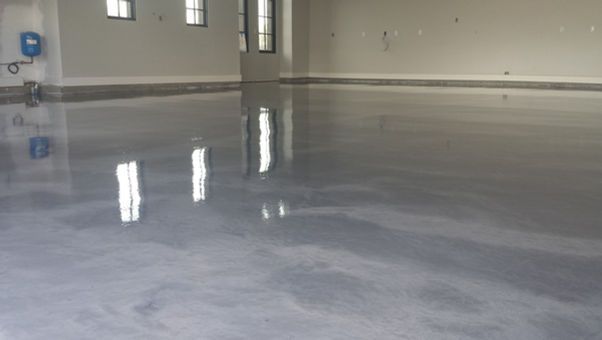
What Changes After Epoxy Application Completes
Once the epoxy cures fully after seventy-two hours, you can roll vehicles over garage floors without leaving tire marks, and spilled antifreeze or motor oil wipes away without penetrating the surface. The coating's thickness and the aggregate mixed into the topcoat determine how much traction the floor provides when wet, which matters for laundry rooms where detergent spills occur and mudrooms where snow melt tracks inside during winter months.
Basement floors that previously showed white mineral deposits from groundwater migration now present a uniform, cleanable surface where standing water from dehumidifier drainage or minor foundation seepage evaporates without leaving stains. The decorative color flakes embedded in the epoxy hide small imperfections in the underlying concrete and provide visual texture that breaks up the monotony of single-color floors. Utility spaces transition from porous concrete that traps dust and grime into surfaces that require only occasional damp mopping to maintain appearance.
The installation does not repair structural cracks wider than a quarter inch or correct foundation settlement issues, which require separate concrete work before epoxy application. Projects in attached garages must account for the transition to adjacent living spaces, typically resolved with threshold strips that accommodate the added floor height from the coating system.
What Homeowners Usually Ask
Residential epoxy projects vary based on room size, concrete condition, and the level of decorative finish selected, with preparation accounting for nearly half the installation time.
What preparation does concrete need before epoxy application?
The surface requires diamond grinding to achieve the proper profile, which removes any existing sealers, paints, or油stains and creates microscopic valleys that the primer bonds into, along with filling any cracks narrower than a quarter inch with epoxy patching compound.
How does New Jersey humidity affect basement epoxy installations?
Moisture testing determines whether a vapor barrier primer is necessary before the base coat, particularly in basements without exterior foundation waterproofing, since hydrostatic pressure can push groundwater through untreated concrete and cause the epoxy to delaminate within months.
Why do garage floors show hot tire pickup in summer?
Tires heated by highway driving can soften epoxy topcoats that lack sufficient cross-link density, which is why commercial-grade formulations with higher solids content resist marking better than retail box store kits, though proper cure time before vehicle use matters more than coating thickness.
What makes decorative color flakes stay embedded in the floor?
The flakes broadcast into wet epoxy sink partially into the base layer, then the clear topcoat encapsulates them fully, creating a mechanical lock that prevents individual flakes from dislodging even when snow shovels or metal shelving scrape across the surface.
When should you avoid scheduling epoxy installation?
Concrete temperatures below fifty degrees slow the chemical cure reaction unpredictably, and relative humidity above eighty-five percent can cause surface blushing where moisture interferes with the epoxy's ability to form a clear, hard finish, making spring and fall the most reliable seasons in Ridgefield for consistent curing conditions.
WSM Epoxy Floors provides detailed surface preparation assessments before starting any residential project, ensuring the concrete's condition supports long-term coating adhesion. Request an on-site consultation to review your floors and discuss decorative options that match your home's interior.