
Protection Against Years of Vehicle Damage
Garage Floor Coatings in Ridgefield for residential garages, commercial fleet facilities, and automotive shops facing oil stains, tire marks, and impact wear
Bare concrete garage floors darken where tires park daily, motor oil soaks into pores and leaves permanent shadows, and dropped tools chip the surface into rough patches that collect dirt. These conditions worsen during New Jersey winters when road salt carried on tire treads accelerates concrete spalling as the salt crystals expand within the concrete's capillary structure. WSM Epoxy Floors applies garage-specific epoxy coatings throughout Ridgefield designed to resist petroleum chemicals, provide impact resistance, and create a sealed surface that tolerates the thermal cycling that occurs when cold vehicles enter heated garages and introduce temperature differentials that stress inferior coatings.
Garage installations prioritize oil resistance by using epoxy formulations with tighter molecular cross-linking that prevents hydrocarbon penetration, combined with slip-resistant aggregate broadcast into the wet coating to maintain traction when tires track in snow melt or when washing vehicles indoors. The coating thickness typically ranges from twenty to forty mils, which provides adequate protection for residential use while remaining cost-effective compared to the sixty-mil systems that commercial fleet garages require.
Schedule a garage inspection to evaluate concrete condition and discuss color combinations that hide tire marks in high-traffic areas.
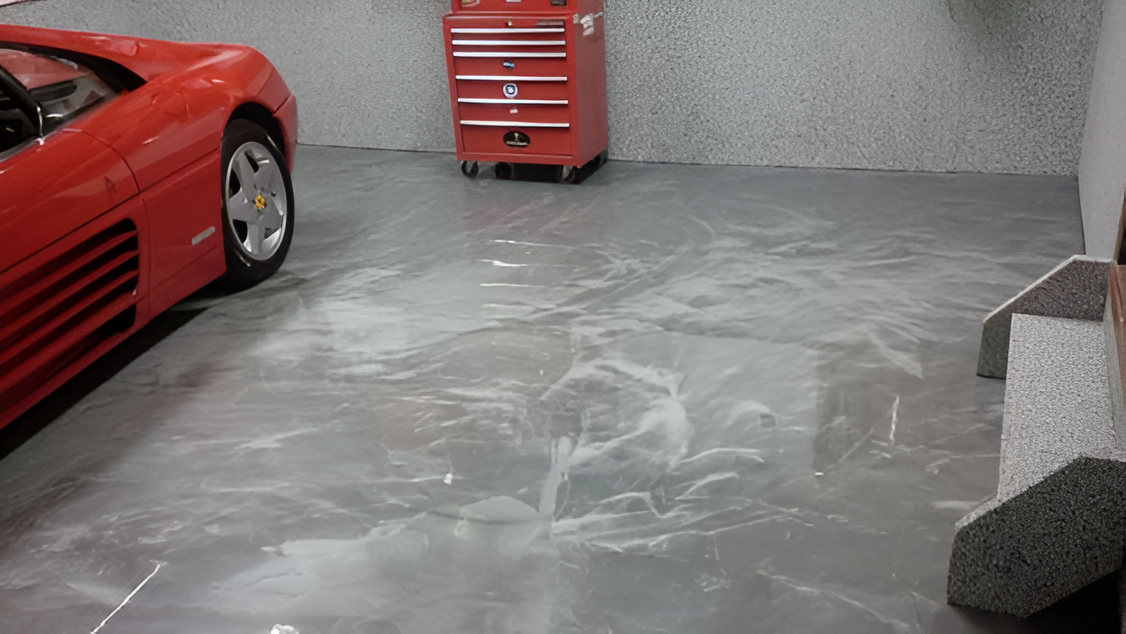
Why Specific Garage Formulations Work Better
Garage coatings face unique stress that differs from interior floors: hot tires transfer heat that can soften insufficiently cured epoxy, causing the tire's weight to create permanent compression marks, and rapid temperature changes from opening overhead doors in winter create condensation that challenges the coating's adhesion to cold concrete. Polyaspartic topcoats cure through a different chemical reaction than standard epoxy, which allows them to harden even in cold conditions and provides flexibility that accommodates thermal expansion without microcracking.
After installation cures, oil drips from aging vehicles bead on the surface rather than soaking into concrete, and battery acid spills that would etch bare concrete simply sit until wiped away without causing permanent discoloration. The decorative flake layer embedded in most garage coatings serves a functional purpose beyond appearance—it hides the fine cracks that develop in aging concrete slabs and creates visual texture that makes dust and light dirt less noticeable between cleanings, reducing the apparent maintenance burden.
The coating does not repair foundation settlement cracks that continue widening or correct drainage problems that allow water to pond against the garage slab, both of which require addressing before coating application to prevent transferred failure. Control joints cut into the concrete slab must receive flexible joint filler because rigid epoxy spanning these intentional breaks will crack as the building shifts.
Questions Before Starting Your Project
Garage coating projects involve considerations specific to vehicle storage environments, with decisions about color, texture, and cure time affecting both appearance and function.
What causes some garage floors to show hot tire marks while others do not?
The epoxy's cross-link density and the topcoat's glass transition temperature determine softening point—retail kits often cure incompletely due to incorrect mixing ratios or inadequate cure time, leaving the surface vulnerable to tire imprinting when rubber heated to one hundred fifty degrees by highway driving contacts the floor.
How does salt exposure affect garage coatings in Ridgefield?
Road salt does not damage properly cured epoxy directly, but it remains abrasive and accelerates wear patterns, particularly in wheel path areas, which is why annual reapplication of sacrificial wax sealers helps extend coating life in climates where salt use runs from November through March.
Why do some garages specify polyaspartic topcoats instead of standard epoxy?
Polyaspartic cures in hours rather than days, which reduces project downtime, and it maintains flexibility at lower temperatures compared to rigid epoxy that can become brittle below freezing, making it better suited for unheated garages that experience temperature swings.
When should concrete be acid-etched versus diamond-ground before coating?
Acid etching works only on clean concrete without existing sealers or heavy oil contamination, while mechanical grinding removes contaminants regardless of type and creates a more consistent surface profile, making it the preferred method for garages with unknown coating history or visible staining.
What makes color flakes stay in place rather than coming loose over time?
Flakes broadcast into wet epoxy at approximately fifty to one hundred percent coverage sink partially into the base layer, then the clear topcoat floods over them and locks them in place through encapsulation, creating a mechanical bond that exceeds the force of vehicle traffic or abrasion from snow shovels dragged across the floor.
WSM Epoxy Floors provides detailed project timelines that account for concrete preparation, coating application, and the full cure period before vehicle use resumes, ensuring realistic expectations about garage accessibility during installation. Contact us to review your garage's specific conditions and select a coating system that matches your usage patterns and aesthetic preferences.